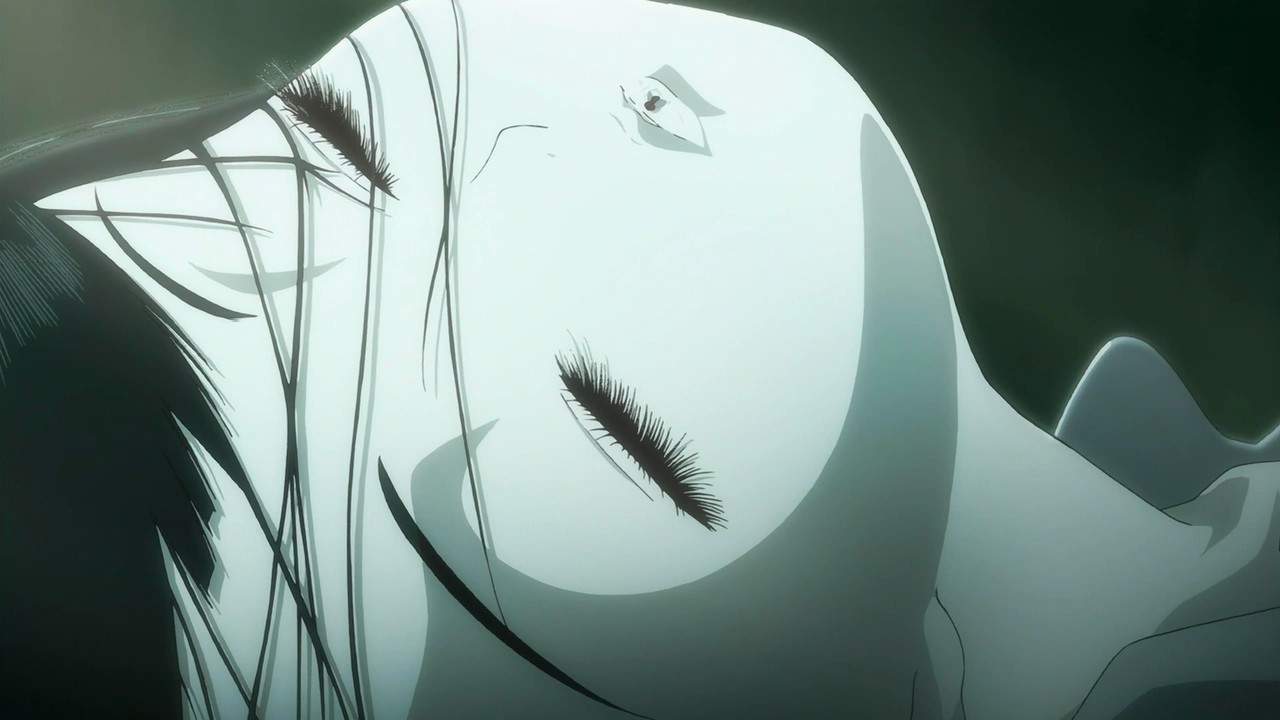
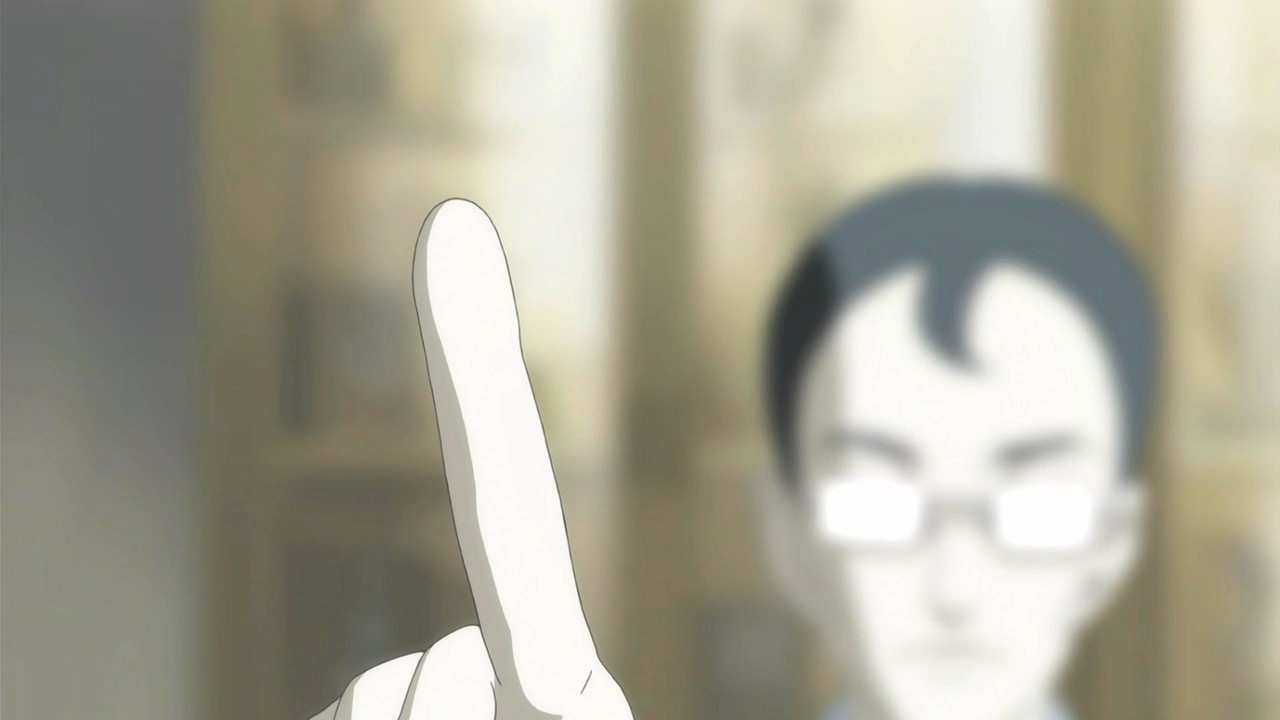
Putting together Production I.G. and Shirow Masamune is cause for celebration nowadays; most noted for his hand in the blindingly excellent Ghost in the Shell universe, even his lesser known works such as Appleseed and Dominion Tank Police stand out as unique and filled with his trademark personality. Given that, it may seem odd that Ghost Hound seems such a vast departure from his other works.
It is less odd when one realises that the series is liberally adapted from a work that Shirow created twenty years ago, that the screenplay is penned by Chiaki J. Konaka and is directed by Ryutaro Nakamura, both of whom were in the same positions for Serial Experiments Lain. It then becomes all the more apparent where the mind bending, perception altering experience comes from. Starting with a trip into the protagonists dream, Ghost Hound never quite lets go and always has that ephemeral, dream like quality to its story, visuals, and most prominently, its sound.
To call the audio anything less than extraordinary would be an understatement; every sound is meticulously sewn into the series fabric, effortlessly evoking emotions and cramming more subtext into a scene than the visuals could hope to manage on their own. Music is conspicuously absent, replaced by helicopter blades blended to a heartbeat, a fly's buzz warped into radio static and a panoply of indistinct and subsonic noises in between. Dialogue is sparse but there is enough to feel natural, never slipping in to art-house silence for the sake of it; more often the audience is treated to the protagonists hearing, a sometimes strained experience with distant sounds or voices from underwater. The entire soundscape is superb and benefits immensely from multi-channel speaker set up.
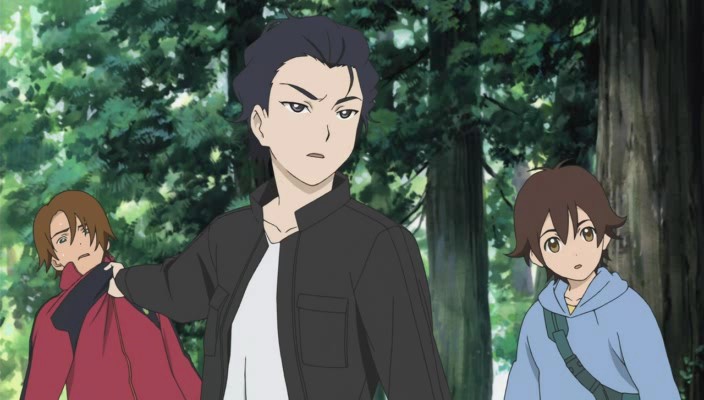
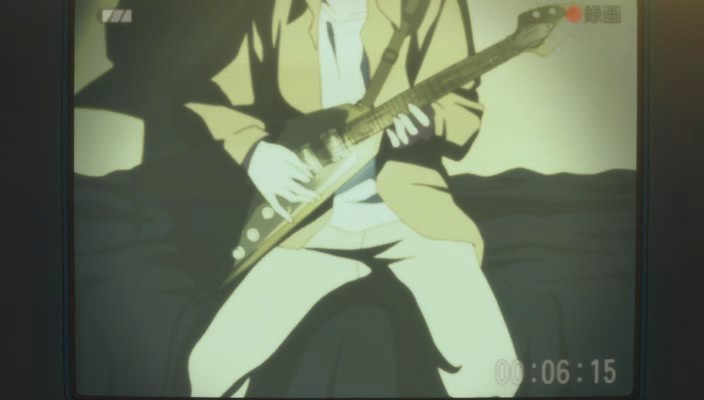
Beyond the technical and crew aspects of the series though, Ghost Hound has a lot to offer in both characters and narrative. In predictable fashion, the story is obtusely guarded in the introductory three episodes, but with deft hands guiding, it never feels protracted and the temptation to pad time with emblematic dream journeys is reigned in with the third instalment. The protagonist, Taro, underwent a traumatic kidnapping when he was young which took the life of his sister, now several years on he struggles with odd dreams and a disassociativity with the world around him. Flawlessly researched, each episode is interspersed with Taro's visits to a school counsellor who speaks of obscure psychotherapies, mirrored in the titles of each chapter and setting the tone for each of the three main characters.
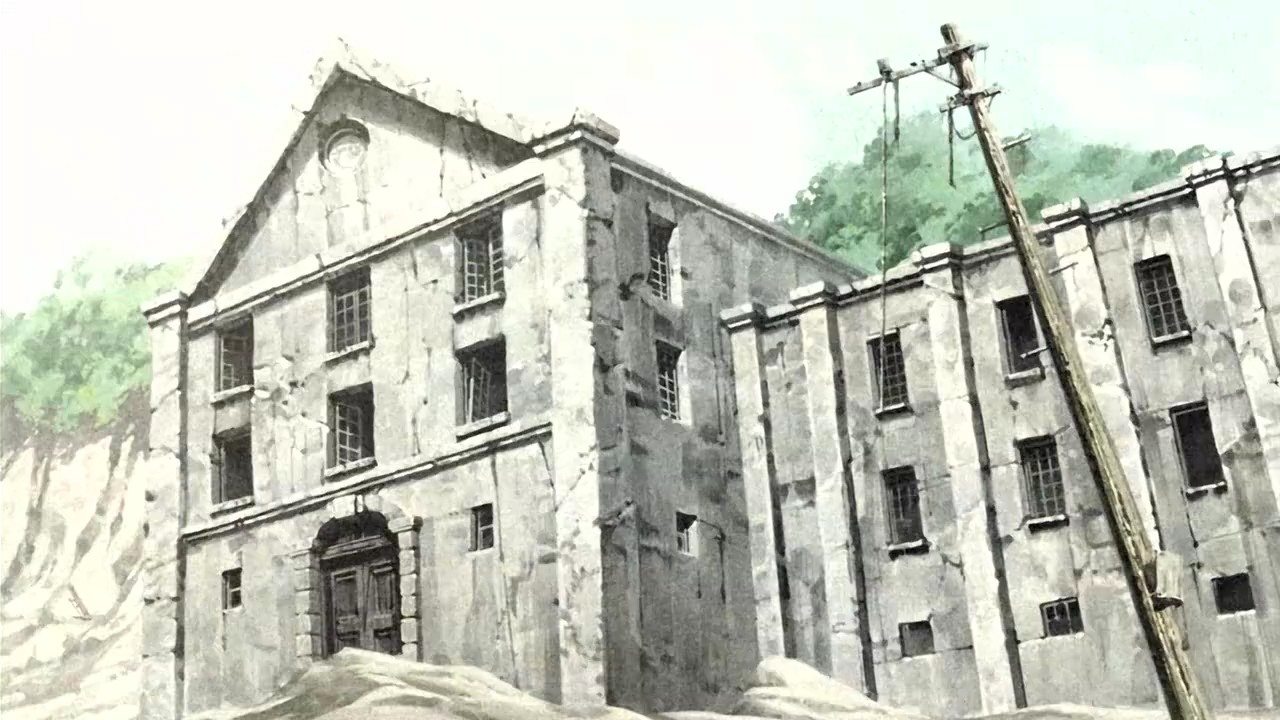
Each of the main cast harbours a troubled past which, thanks to the loquacious Masayuki, leads them to an abandoned hospital which, likewise, has a very troubled past. This is as far as the first three episodes manage and despite the lack of forward momentum in the narrative, the episodes weren't spent idling; instead a deep understanding of the core three characters is built up, long before they set out for the hospital. This development is skilfully done and is another part of an all round excellent whole. Indeed it is difficult to pick fault with Ghost Hound when it is so expertly produced in all areas; the only criticism possible would be to say that it borrows a lot from the mind-fuck genre pioneered by the leading crew: symbolism over exposition. What Ghost Hound represents, even in the scant three episodes of a twenty two episode series, is a mastery of its craft.
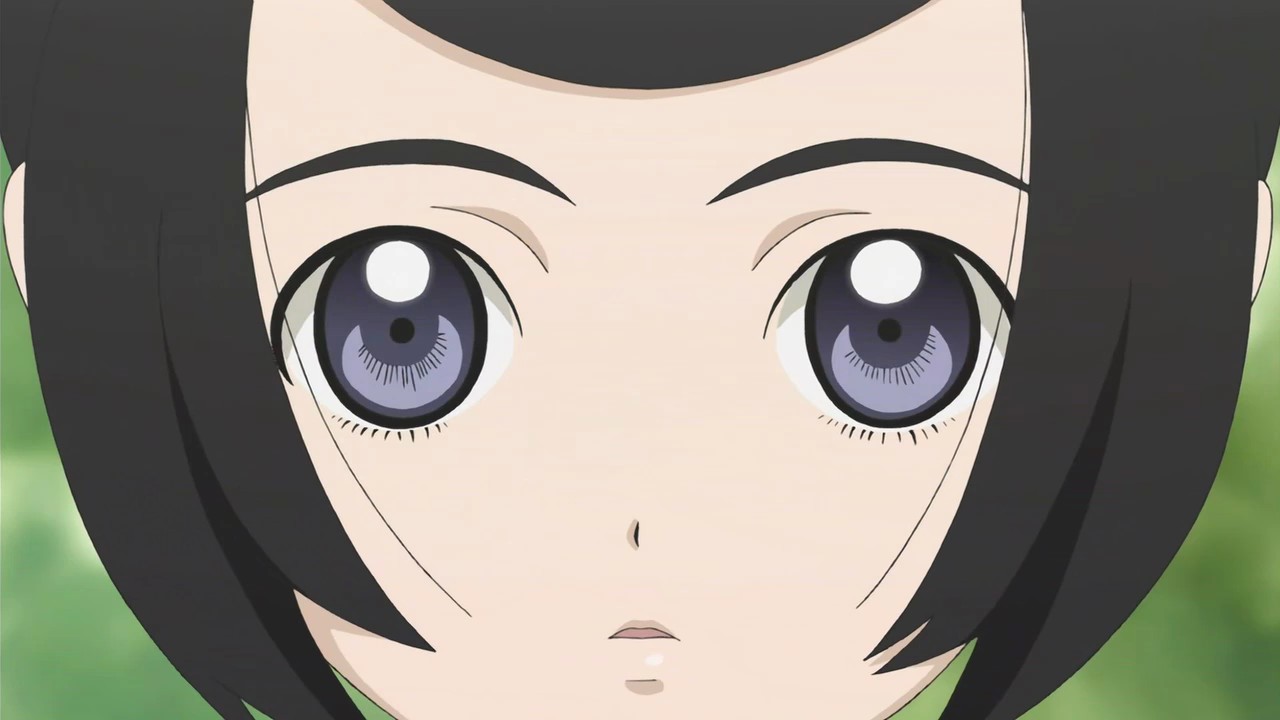
The series is never bizarre for no reason: it doesn't extend scenes either for padding or out of auteur bloody-mindedness; neither does it skimp on plot or characters, leaving no one as a cypher or unknown entity for long. The animation is superb all round, as expected from Production I.G. and their 20 Year Anniversary project, helped along by the simple but emotive art-style whose most prominent feature is the eyes on which much attention is lavished. There is no part of the series so far which fails to amaze and the rest of it needs to merely keep up this quality to be something unquestionably stunning.