Short version: if you enjoyed a post and don’t want to comment, click the Spiffy Button to let me know.
Feedback from people on the internet is hard; I can monitor hits and visits and bounces and loading times until the heat death of the universe and I still wouldn’t know whether the people visiting my site enjoy my content. Comments are often cited as a good indicator of blog interaction, some would say that a blog starts when its comments do, but especially with anime blogs (which I guess given the volume of content on the subject I’ve produced, mine falls into) comments tend to be about the subject (episode, series, movie etc.) rather than about what has been written. Just check out any well frequented anime blog (RandomC, The Cart Driver, Metanorn et. al.) for examples.
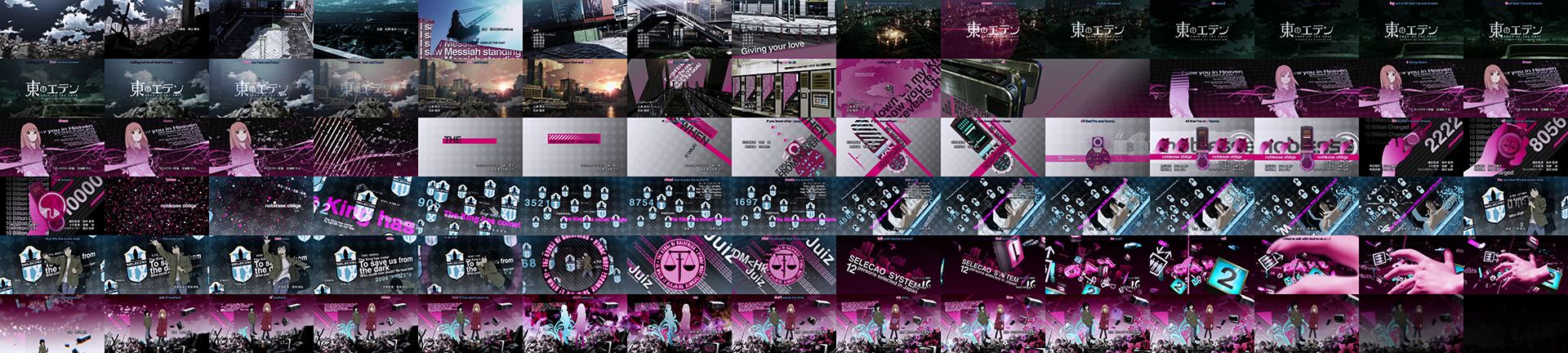
Ninety seconds. Just under 2,200 frames. That’s how long the majority of anime openings have to stick in the mind, set the scene and contribute to the microcosm that history has created for them. Right back to what some would consider the dawn of modern anime with Astro Boy in the 1960’s, the prototype for modern anime openings was there, continuing through the seventies and eighties through to recent history of the nineties and 2000+.
setting the tone for bombastic score of the series itself
By now you’ve mostly likely seen the “Every Anime Opening Ever Made” video which cycles through a lot of the tropes and visual motifs that are (over)used, set to remixed trance music. Like a lot of pithy satire its humour and truth doesn’t hold up to scrutiny and even a limited exploration of openings from any time period would highlight how wrong it is. That wasn’t what got me thinking about anime openings though but an offshoot when musing on the slow burning RahXephon one. Originally this was going to be a dissection of the hidden meanings in the visuals and mentioning other similar openings. Then I got lost in a endless loop of watching an opening, then remembering just one more and before I knew it I was attempting to sort the openings I had seen into some kind of system.
I’m not a huge fan of the open letter format - its use for pithy snark has long since diluted whatever potency it once had - so I’ll get right to the point: I want access to your data.
Not in a creepy stalker way, I don’t want to know your three sizes and nor do I want whatever user data you choose to collect. No, I’m talking about the data you have on anime and its minutiae - characters, staff, companies and all the tidbits in between. Whether you call it a database, an encyclopaedia, a list, a planet or otherwise, I’m interested.
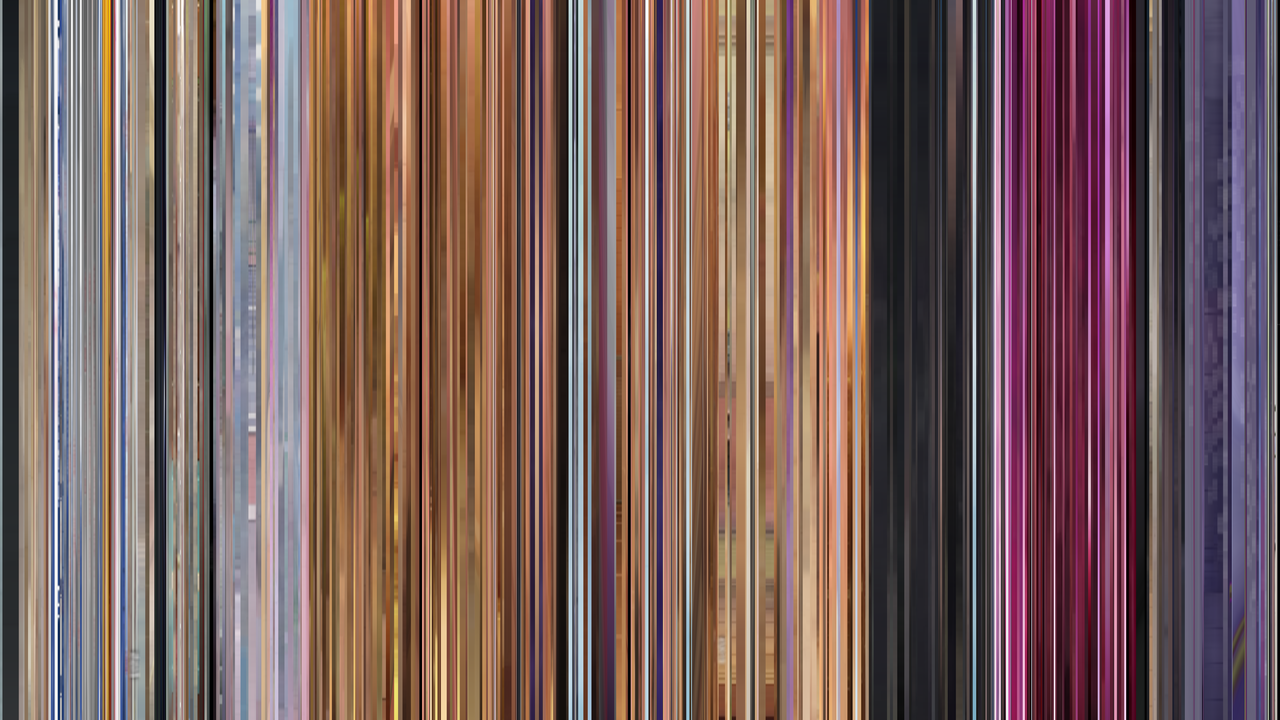
I’ve been keeping up with Noragami (Stray God) this season and got to thinking about the colour palette used in the show. To my eyes it has a cold, wintery palette without being obnoxiously colour graded (looking at you here GoHands). This is different from other shows set during winter (Mikakunin et. al.) that still manage to stay bright and cheerful, perhaps thanks to luminous hair colouring but that’s an aside. I idly wondered if there was a way to get a high-level view of a series’ colour palette without resorting to wooly adjectives?
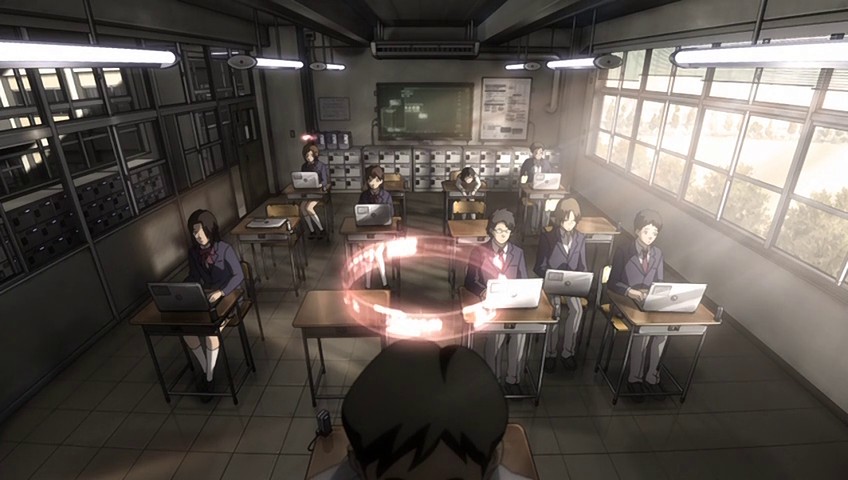
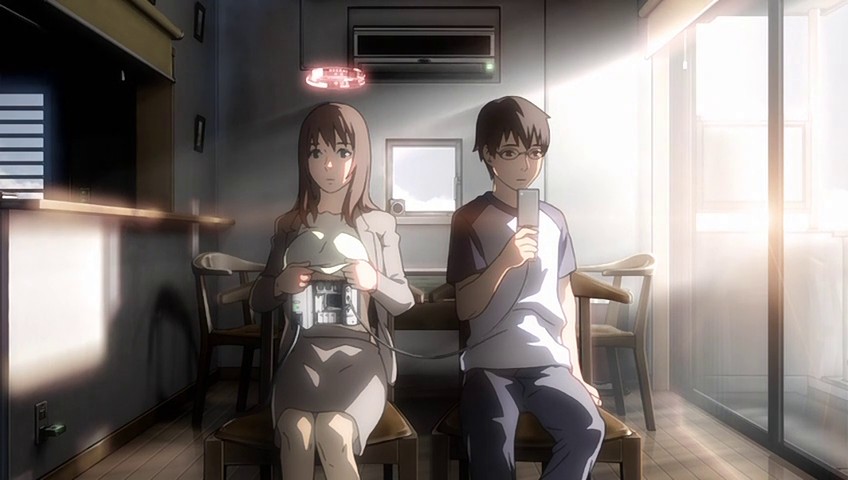
The recently released Eve no Jikan movie is a succinct and mostly successful retelling of the six original net animation episodes released between August 2008 and September 2009. Set in a future where commercial helper robots are commonplace, the titular "Time of Eve" café is a place where the delineation between robots and humans is removed and the problems encountered with such a blending are made manifest.
Like many robot-focused stories, Eve no Jikan's central conceit is artificial intelligence. Divorcing that from the concept of robotics, the mechanics of which are already available in various forms not least of which the famous ASIMO robot from Honda, is important. Autonomous (rather than "intelligent") robots have their own, not exclusive set of hurdles to overcome, starting with the mundane - navigating simple environments - precipitously growing more complex: speech recognition, language parsing, decision making... The list goes on.